In this blog

Need a design partner that scales with you?
See exactly how Design Shifu can become your on-demand design team. Book a free demo call.
Are your product photos helping or hurting your sales?
In this case study, we break down how better product photography boosted an online store's sales by 34%. Learn what worked, what didn’t, and how you can apply the same tactics to your own business.
I mean, come on. We're talking about pictures. How hard could it be, right? Point, shoot, upload. Done.
But, was I wrong!
Let me tell you about Sarah, my friend who runs an online furniture store called Modern Haven. Last year, she was completely stressed out. Her products were beautiful, her prices fair, and her customer reviews amazing, but her sales were as flat as day-old soda.
TL;DR
- Upgrading your product photography could significantly boost your e-commerce sales.
- This blog shares how one online furniture store increased sales by 34% just by improving photos, adding lifestyle context, high-quality close-ups, and multiple angles.
- Better photos build trust, reduce cart abandonment, and create emotional appeal. Your product photos may be your most underutilized sales tool.
When Good Products Meet Bad Photos
Sarah's conversion rate was stuck at 2.1%. For context, that's like having 100 people walk into your store, pick up items, examine them and then 98 of them just walk out without buying anything.
The crazy part? When people did buy, they loved their purchases. Five-star reviews everywhere. Low return rates. Happy customers posting photos of their new furniture on Instagram.
So what was the disconnect?
We dug into it together (because that's what friends do, right?). We looked at heat maps, exit surveys, and customer feedback. And slowly, painfully, the truth emerged.
Her product photos weren't doing her any favors.
Picture this: You're shopping for a $800 dining table online. The photo shows this bland, washed-out image against a stark white background. The lighting makes the wood look cheap. You can't see the details. You have no idea how big it actually is.
Would you click "buy now"? Me neither.
How Poor Product Photos Were Killing Sales
Here's what Sarah's photos looked like (and maybe yours do too):
- The lighting was all over the place. Some photos were too bright, others too dark. Nothing looked consistent. It made her store look amateur. And when you're asking people to spend hundreds of dollars, being an amateur doesn't inspire confidence.
- One angle. That's it. Front-facing shot, take it or leave it. No detailed shots. No different perspectives. It's like trying to buy a car after only seeing the front bumper.
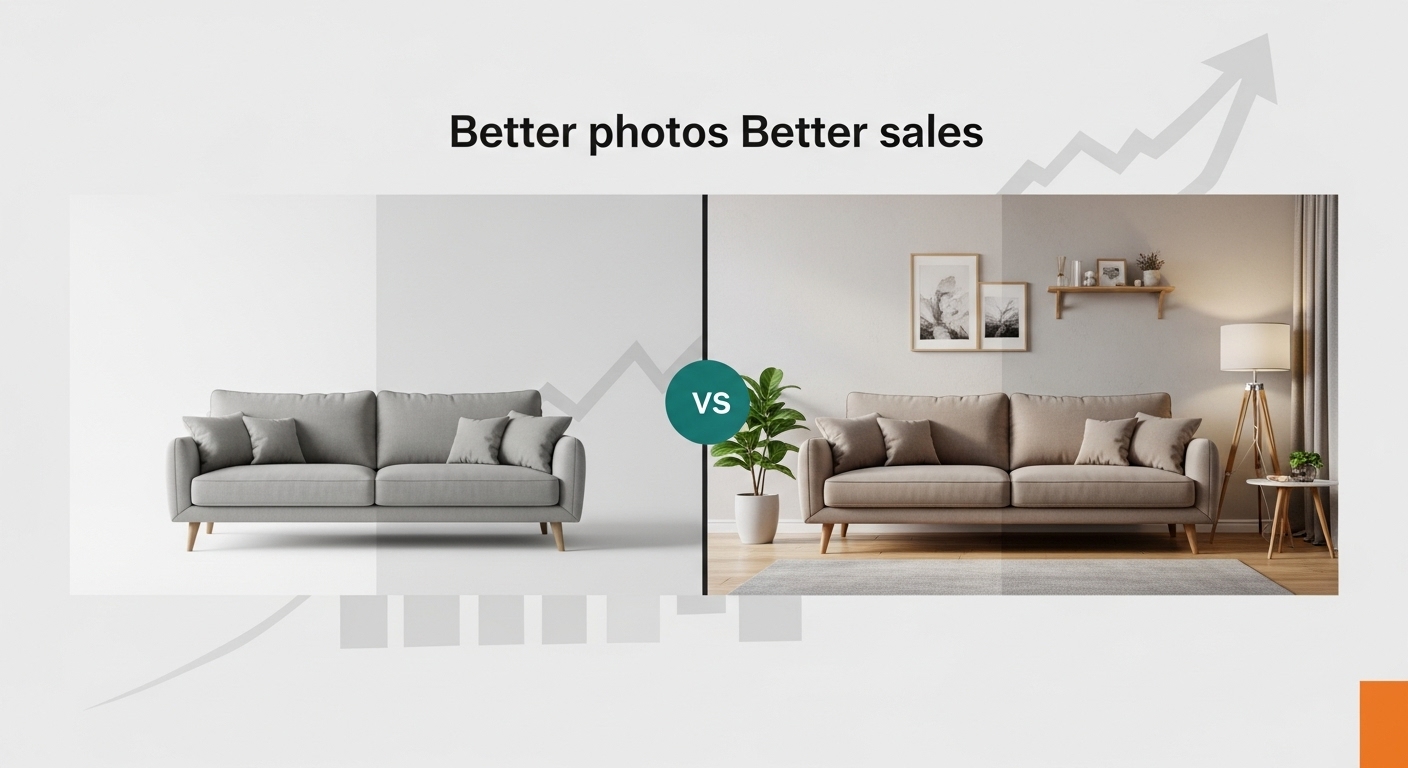
- Zero lifestyle context. Just furniture floating in white space. How's a customer supposed to imagine that couch in their living room when they can't even tell if it's big enough for their space?
- Pixelated mess when you zoomed in. You know that moment when you try to get a closer look at something online and it turns into a blurry disaster? Yeah. That was happening constantly.
The worst part? Sarah knew her photos weren't great. But she kept putting off fixing them because it felt overwhelming. Sound familiar?
The Turning Point: Realizing the Power of Visual Storytelling
The turning point came when Sarah's 12-year-old niece was browsing her website and said, "Aunt Sarah, these pictures make everything look boring. Why don't you show how pretty they look in a real house?"
That's when we decided to go all-in on a complete photo makeover. Not just better lighting or higher resolution, we're talking about a complete visual storytelling overhaul.
The 3-Step Product Photography Strategy That Increased Sales by 34%
Here's what we did, step by step:
Step 1: Use Professional Equipment and Consistent Backgrounds
First things first, no more iPhone photos taken in Sarah's garage. We set up a proper photography space with professional lighting, consistent backgrounds, and equipment that wouldn't make everything look like it was shot through a foggy window.
The investment felt scary at first. About $15,000 for equipment and hiring a photographer for the initial batch. But when you're talking about potentially increasing sales by 30%+. Well, the math starts looking pretty good.
Step 2: Add Lifestyle Product Photography to Tell a Story
This is where things got interesting.
Instead of just photographing a dining table, we staged a whole scene. Elegant place settings. Fresh flowers. Warm, inviting lighting that made you want to gather your family around it. Suddenly, customers weren't just buying a table, they were buying the vision of Sunday dinners and birthday celebrations.
We shot each piece from 8-12 different angles. Close-ups of the wood grain so you could see the craftsmanship. Wide shots showing scale. Detailed shots of the hardware.
The goal? Eliminate every possible question or doubt a customer might have.
Step 3: We Made It Feel Real
You know what's funny? The photos that performed best weren't the "perfect" ones. They were the ones that felt lived-in. A coffee mug on the side table. A throw blanket casually draped over a chair. Books stacked on a shelf.
These little touches made the difference between "nice furniture" and "I can see this in my home."
The E-Commerce Metrics That Prove It Worked
Three months after the new photos went live, Sarah called me practically screaming with excitement.
Her sales had jumped by 34%.
Let me repeat that: Thirty-four percent.
Just from better photos.
But it gets better:
- Her conversion rate went from 2.1% to 3.0% (that's a 42% improvement, by the way)
- People were spending 156% more time looking at her products
- Cart abandonment dropped by 19%
- Customer service calls about product details? Down 23%
The photos were doing the selling for her.
What Really Boosted Sales (And Why It Worked)
Looking back, three things really moved the needle:
1. Lifestyle Shots That Sparked Emotion
Remember that dining table I mentioned? The lifestyle shot showing it in a warm, inviting dining room got 3x more engagement than the plain product shot. People weren't just seeing furniture – they were seeing possibilities.
2. Details That Built Trust
Those close-up shots of wood grain and fabric texture? Pure gold. Customers started commenting on the quality they could see in the photos. When someone can examine your craftsmanship before buying, they feel more confident about the purchase.
3. Multiple Angles That Answer Questions
This might sound obvious, but showing products from every angle eliminated so many objections. No more "I wonder what the back looks like" or "How does this connect to that?"
Questions answered = barriers removed.
Why High-Quality Product Photos Matter for Your Store
Here's the thing about better product photography – it's not just about making things look pretty (though that helps). It's about respect.
When you invest in quality photos, you're showing customers that you respect their time, their money, and their need to make informed decisions. You're saying, "I believe in what I'm selling enough to show it to you properly."
And customers feel that respect. They respond to it.
Your Product Photography Action Plan
If Sarah's story resonates with you (and your own photo situation feels less than ideal), here's how to start:
This week:
- Take an honest look at your product photos. Really look at them. Are they telling the story you want to tell?
- Check your conversion rates. If they're below industry averages, photos might be the culprit.
This month:
- Start with your top 20% of products. Get those photos right first.
- Test new photos against old ones. Let the data tell you what's working.
Over the next quarter:
- As you scale up your photo strategy, make sure you’re not slowing down your site. Use tools like Google PageSpeed Insights to test your product pages and ensure fast load times, even with high-res images
Key Takeaways
- Poor photos can tank conversion rates, even if your product is excellent.
- Professional product photography is an investment, not an expense, it pays off.
- Lifestyle photos tell a story that sparks emotional buying.
- Detailed shots build trust and reduce returns.
- Multiple angles reduce doubt and customer service inquiries.
- Photo quality affects brand perception and professionalism.
- Start with your best-selling products for the quickest ROI.
Final Thoughts: Respect Your Products and Your Customers
In a world where customers can't touch, smell, or try your products before buying, your photos are doing all the heavy lifting. They're your salespeople, your showroom, and your brand ambassador all rolled into one.
Sarah's 34% sales increase didn't happen because she got lucky. It happened because she finally gave her amazing products the visual presentation they deserved. Your products probably deserve the same respect.
The question is: what's stopping you from giving it to them?
That’s exactly where Design Shifu comes in. Think of us as your design team on demand, ready to create scroll-stopping product photos and visuals that help your products shine (and sell).
FAQ
Why do product photos matter so much in e-commerce?
Because customers can’t touch or try your product, photos are their primary trust-building tool.
What types of product photos perform best?
Lifestyle shots, close-ups, multiple angles, and zoomable high-res images.
Is professional photography worth the cost?
Yes, as seen in Sarah’s case, better photos increased her sales by 34% and conversion rate by 42%.
What’s the first step to improving product photos?
Audit your top-selling product listings and replace low-quality images with professional, story-driven visuals.
How many photos should I include per product?
Aim for 8–12 images including lifestyle, detail shots, and various angles.
How can I test if better photos are working?
Run A/B tests using your original vs. updated photos and track changes in conversion rate, bounce rate, and engagement.
What equipment or help do I need to get started?
Ideally, hire a professional photographer or invest in studio lighting, a DSLR camera, and consistent backdrops.
About the author

Sameena is an Organic Growth Specialist and Content Writer at Design Shifu, crafting SEO-driven content that boosts visibility, builds brand authority, and drives meaningful organic growth.