In this blog

Need a design partner that scales with you?
See exactly how Design Shifu can become your on-demand design team. Book a free demo call.
TL;DR
- Advertising design is graphic design created to promote a product, service, brand, offer, or idea and influence a specific audience action such as a click, purchase, sign-up, visit, or brand recall.
- It's a specialized branch of graphic design, not a synonym for it. General graphic design covers a broad range of visual communication, while advertising design focuses on a specific campaign objective.
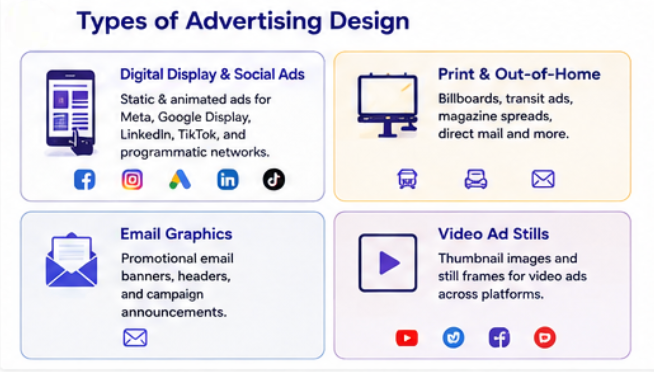
- Common formats include digital display and social ad creatives, print and out-of-home advertising, email graphics, and video ad stills.
- Effective advertising design comes down to a handful of repeatable elements: hierarchy, a focused primary message, strong branding, and platform-specific sizing.
- Marketing teams often outsource this work when campaign creative needs exceed their internal design capacity.
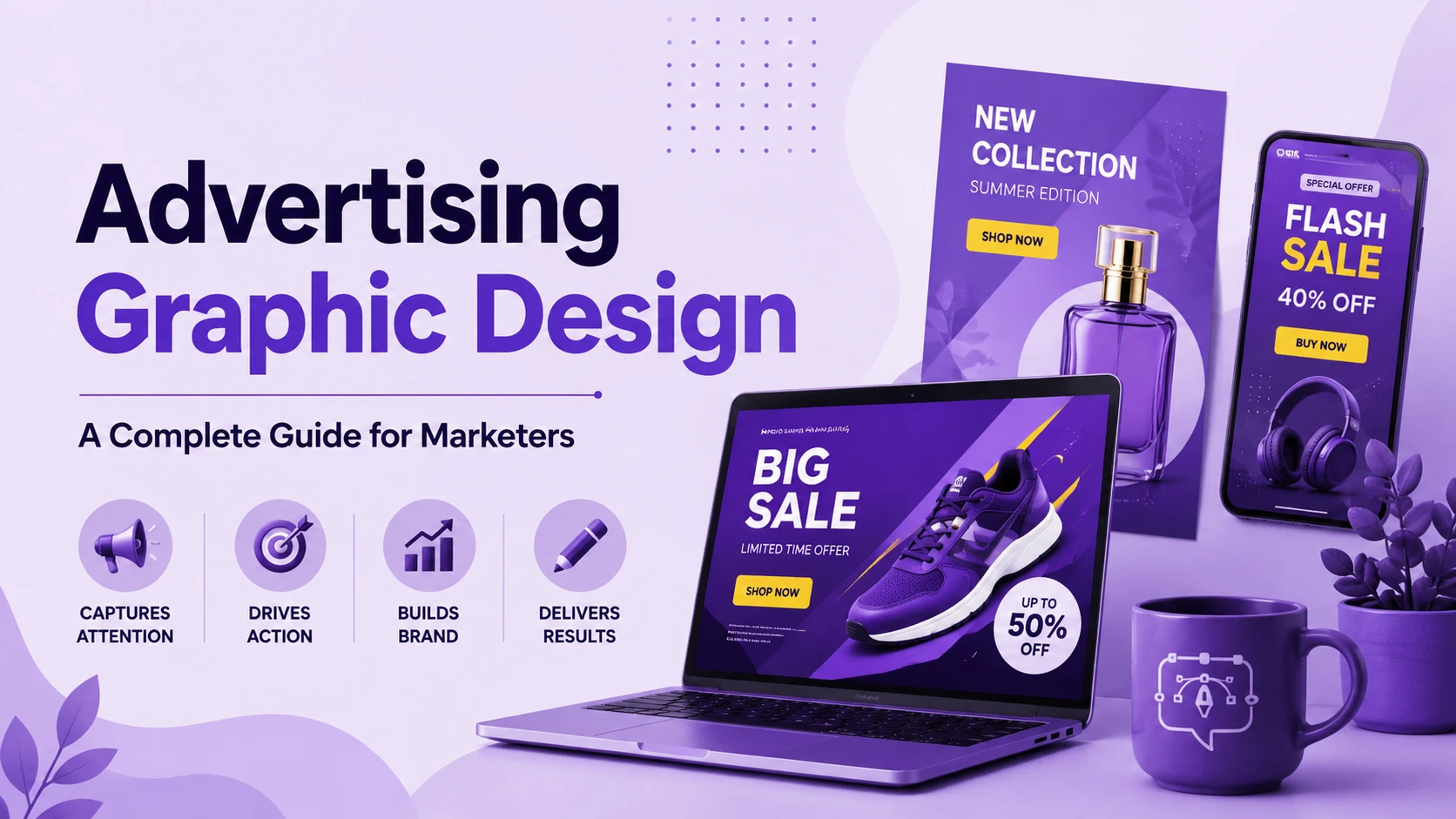
Advertising graphic design is everywhere from social media ads and display banners to billboards, promotional emails, and product campaigns. But what makes an advertising graphic different from an ordinary marketing graphic or general design?
The difference comes down to purpose. Advertising graphic design is created to promote a product, service, brand, offer, or idea and influence a specific audience action. That action could be clicking an ad, making a purchase, signing up for a service, visiting a store, or simply remembering a brand.
For marketers, understanding this distinction matters because effective advertising design isn't just about making an attractive graphic. It requires the right message, visual hierarchy, branding, format, and call to action for the audience and platform where the ad will appear.
In this guide, you'll learn what advertising graphic design is, how it differs from general graphic design and marketing graphics, the main types and examples, key design principles, the ad creation process, pricing models, and when outsourcing makes sense.
What Is Advertising Graphic Design?
Advertising graphic design is the creation of visual assets for advertisements that promote a product, service, brand, offer, or idea and influence a specific audience action. That action might be a click, a purchase, a sign-up, a store visit, an inquiry, or simply remembering the brand next time it matters. Sessions College's breakdown of advertising design frames it well: its design in service of a commercial message, not design for its own sake.
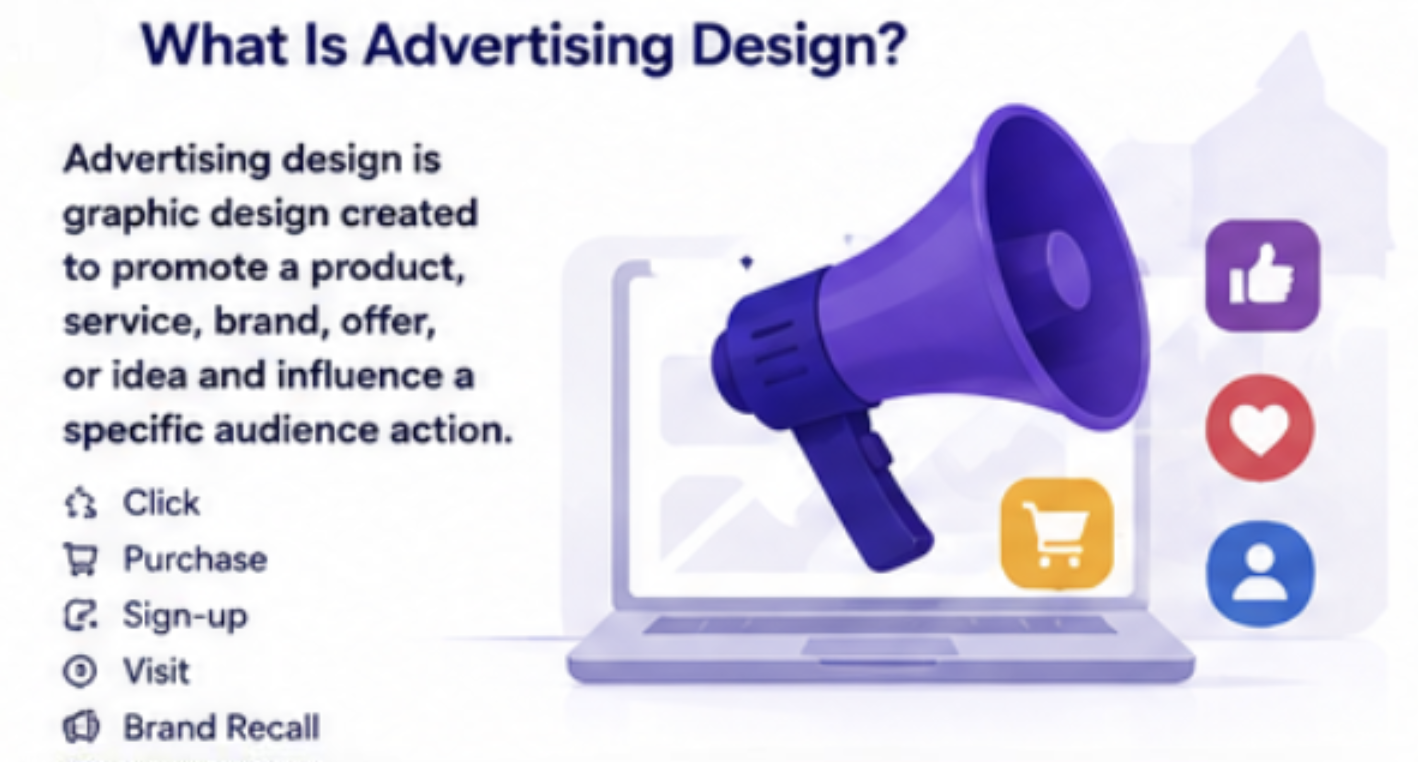
That's a deliberately broad definition, and it needs to be. Not every ad is chasing an immediate "buy now." A Super Bowl brand spot, highway billboard, or product-launch teaser may be built primarily for recall and awareness, with no direct-response CTA in sight. Advertising design covers both ends of that spectrum.
Is Advertising Design the Same as Graphic Design?
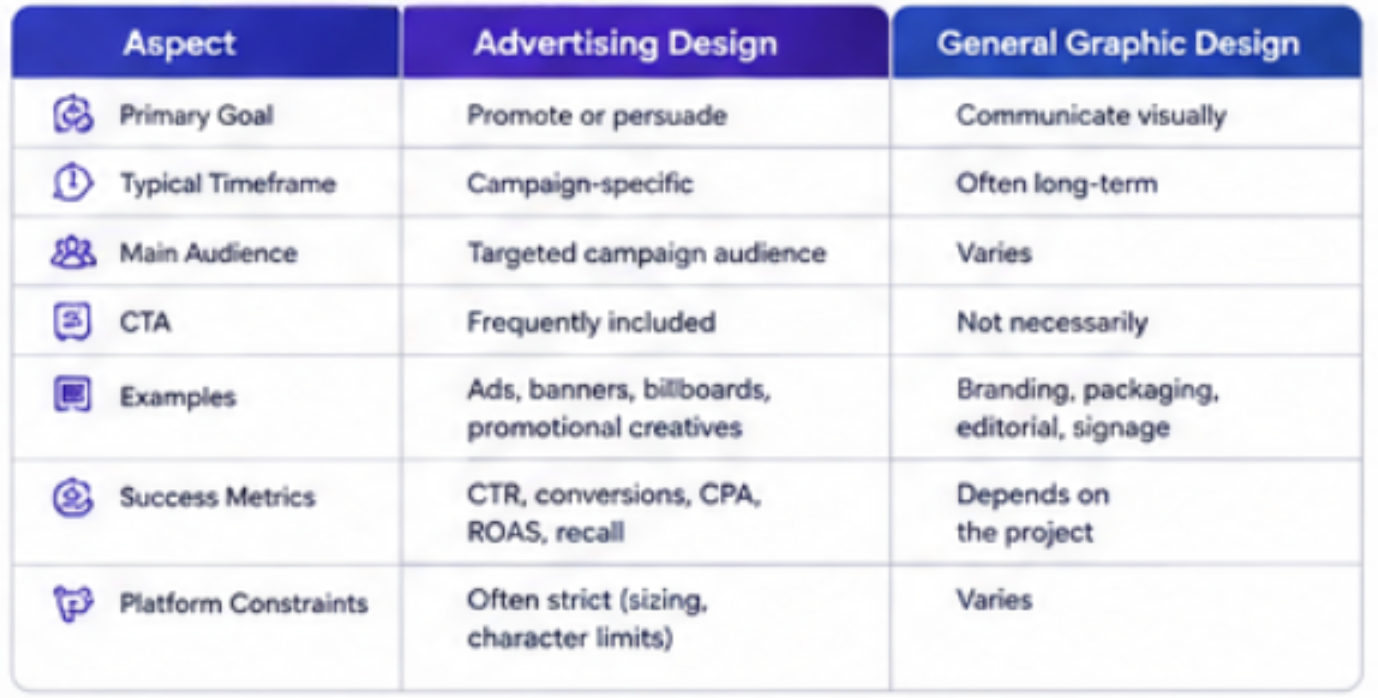
General graphic design covers a huge range of work: branding, packaging, editorial layout, UI design, signage. Advertising design is a specific application of that discipline, aimed at promotion and persuasion within a campaign.
Where It Fits in the Marketing Funnel
Advertising design shows up at every funnel stage, but the job changes at each one. Top-of-funnel creative needs to interrupt and introduce; retargeting creative needs to remind and remove friction; bottom-funnel creative needs to close the deal with a clear offer. A single "ad template" rarely works across all three. This is one reason campaigns can underperform even when the design quality is high.
Is Advertising Design the Same as Graphic Design?
No, advertising design is a specialized branch of graphic design, not a synonym for it. General graphic design optimizes for identity, clarity, and long-term consistency. Advertising design optimizes for a specific campaign objective within a defined format and time window. A designer can be excellent at one and rusty at the other, which is exactly why some agencies and freelancers who are strong brand designers still produce ad creatives that underperform.
Advertising Design vs. Marketing Graphics
Advertising design is one part of graphic design for marketing, while marketing graphics cover a much broader range of visual assets. Marketing graphics is the broader category covering visual assets used throughout the marketing process, while advertising design focuses specifically on promotional campaigns.
Marketing graphics can include blog graphics, infographics, email visuals, social media posts, presentations, lead magnets, and case-study visuals. Advertising graphics are more specifically tied to campaigns, offers, products, or audience actions.
Types of Advertising Design
Digital Display and Social Ad Creatives
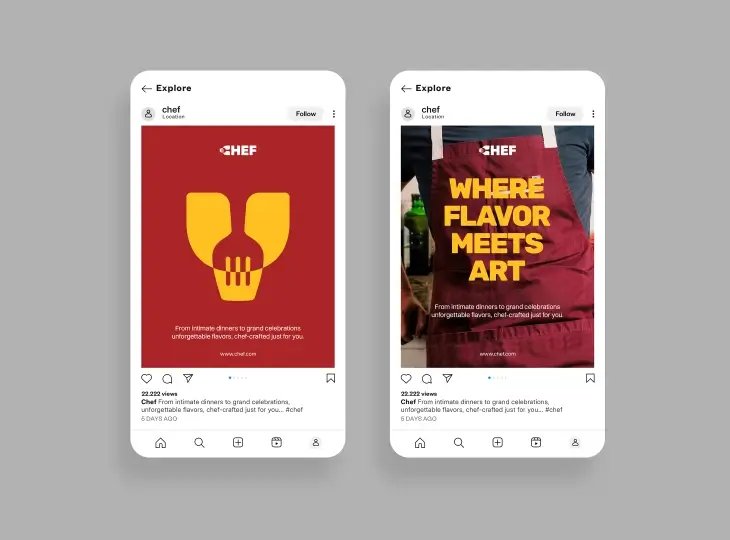
Digital display and social ad creatives are among the most common forms of advertising design today. They include static and animated banners for Meta, Google Display, LinkedIn, TikTok, and programmatic advertising networks.
Each platform and placement can have different dimensions, aspect ratios, and safe areas. That's why a single "hero" creative often needs to be resized and re-laid out for different placements rather than simply shrunk.
The Meta Ads Guide and Google's responsive display ad specifications are useful references for checking current platform requirements, since specifications can change.
Print and Out-of-Home Advertising
Print and out-of-home advertising includes billboards, transit ads, magazine advertisements, newspaper ads, posters, and direct mail.
These formats demand extreme simplicity because viewers may have only a few seconds to process the message. A billboard, for example, usually needs far less information than a magazine advertisement because the audience may be viewing it while moving past it.
Email and Video Ad Stills
Email and video ad stills round out the category. Promotional email graphics can include banners, product visuals, offer graphics, and campaign headers, while video advertising may require thumbnails, opening frames, and still graphics for different placements.
Key Elements of Effective Advertising Design
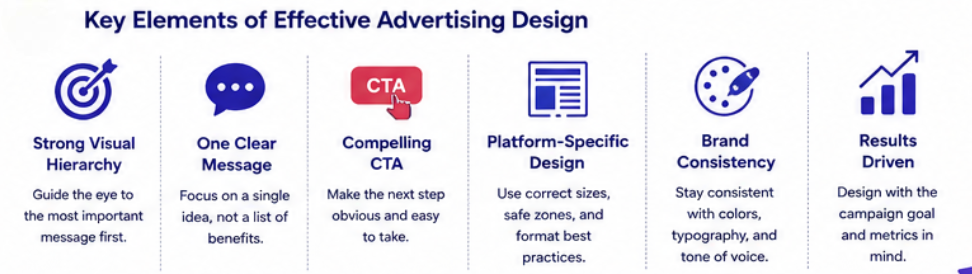
A handful of fundamentals show up in almost every ad that performs well:
Visual Hierarchy and a Focused Message
One of the most common advertising design mistakes is trying to communicate too many competing ideas in one creative. Effective ads usually prioritize one primary message, with supporting information arranged around it.
Typography and Color
Readable fonts, clear size differences, appropriate line spacing, and strong contrast help viewers understand the message quickly. Color can reinforce brand identity while helping important elements such as CTAs stand out.
Imagery and White Space
The image should support the campaign message rather than simply fill empty space. White space gives the eye room to move through the composition and makes important information easier to identify.
Branding and CTA
Advertising creative should contain enough brand recognition, such as the logo, colors, typography, or visual style to connect the message back to the company.
The CTA should also match the campaign objective. "Shop Now" communicates a different level of purchase intent than "Learn More" or "Book a Demo."
Platform-Specific Sizing
An ad designed for a square social placement rarely works unchanged as a small display banner or vertical story placement. Text that's readable at full size can become illegible in a smaller placement.
Accessibility
Use sufficient text/background contrast, readable typography, and avoid relying on color alone to communicate important information. For text-based elements, WCAG recommends a minimum contrast ratio of 4.5:1 for normal text and 3:1 for large text. These practices can make advertising accessible to a wider audience.
A Simple Process for Building One
1. Define the Objective
What does the ad need to accomplish?
2. Identify the Audience
Who will see it and what matters to them?
3. Establish the Core Message
What is the one thing the audience should remember?
4. Choose the Format
Determine where the ad will appear before designing it.
5. Design the Creative
Build the visual hierarchy around the core message.
6. Check Brand Consistency
Verify colors, fonts, logo usage, imagery, and other brand elements.
7. Check Platform Requirements
Review dimensions, aspect ratios, safe areas, file formats, and other requirements.
8. Test Variations
Test different headlines, images, CTAs, layouts, or offers where appropriate.
Advertising Design Checklist
- [ ] Campaign objective defined
- [ ] Target audience identified
- [ ] One primary message
- [ ] Clear visual hierarchy
- [ ] Strong, visible CTA
- [ ] Correct platform dimensions
- [ ] Brand guidelines followed
- [ ] Mobile readability checked
- [ ] Landing-page message aligned with the ad
- [ ] Creative variations prepared for testing
Advertising Design Pricing Models
Freelancers commonly charge per project or per design, agencies typically bundle advertising creative into a broader retainer alongside strategy and media planning, and flat-rate subscriptions charge one monthly fee for ongoing creative requests instead of pricing per asset. The right model depends on creative volume, complexity, turnaround requirements, and how much capacity your internal team has.
An ongoing design subscription provides recurring creative support for a predictable monthly cost rather than pricing every individual asset separately.
This can be useful for marketing teams that regularly need
- Social media ads
- Display creatives
- Campaign graphics
- Promotional banners
- Resizes and adaptations
- Marketing collateral
- Other recurring design work
You can see how Design Shifu's ongoing design plans are structured on Design Shifu's pricing page.
Should You Outsource Advertising Design?
A few reliable signals point to "yes": your in-house designer is a generalist stretched across branding, web, and ads, and ad output is the first thing to slip; campaign creative consistently ships late because design is the bottleneck; or you're running multiple platforms and can't keep up with resizing one hero creative into eight different formats.
You can also review client feedback on Design Shifu's reviews page before deciding.
Conclusion
Advertising design is a specific discipline within the broader world of graphic design, one built around influencing a specific audience action, whether that's an immediate click or simply staying memorable. The formats vary (social, display, print, email, video), but the underlying job stays the same: one clear message, sized correctly for wherever it's going to run.
If your team is stretched thin trying to produce campaign creative alongside everything else on the design list, Design Shifu's design subscription provides ongoing advertising and campaign creative support alongside branding, web, and social design with one creative team and a predictable monthly plan.
FAQ
What is advertising graphic design?
Advertising graphic design refers to the visual design work used in advertising, including banners, social creatives, print ads, email graphics, and other promotional assets. The term is often used interchangeably with advertising design, although advertising design can also refer more broadly to the creative discipline and process behind those assets.
Is advertising design the same as graphic design?
No. Advertising design is a specialized branch of graphic design focused on campaign-specific promotion, while general graphic design covers a much wider range of work including branding, packaging, and editorial layout. The two overlap but require different skills and briefs.
What are the main types of advertising design?
The main categories are digital display and social ad creatives, print and out-of-home (billboards, transit, direct mail), email marketing graphics, and video ad stills or thumbnails. Most marketing teams need several of these formats running at once.
How much does advertising design cost?
Freelancers typically price per project or per design, agencies may bundle advertising creative into broader retainers, and design subscriptions provide ongoing creative support for a predictable monthly fee rather than pricing every asset individually.
What software is used for advertising design?
Common tools include Adobe Photoshop, Illustrator, and InDesign, along with Figma and Canva for faster turnaround work. The tool matters less than the designer's understanding of platform specs and campaign objectives, which is one reason many teams outsource this rather than train someone up on the software.
Can AI create advertising designs?
AI tools can help with concept brainstorming, generating creative variations, and resizing assets across formats. Human review still matters for brand consistency, message clarity, and making sure the creative actually fits the platform it's running on.
How do you measure whether advertising design is working?
Track it against the campaign objective- CTR, conversion rate, CPA, and ROAS for direct-response creative, or reach and recall metrics for brand-awareness campaigns. A/B testing different images, headlines, or layouts is the most reliable way to see what's actually driving performance.
About the author

Sameena is an Organic Growth Specialist and Content Writer at Design Shifu, crafting SEO-driven content that boosts visibility, builds brand authority, and drives meaningful organic growth.