10 Food Packaging Design Ideas for Every Industry
Branding8 min read
Written by Sameena SultanaPublished Updated
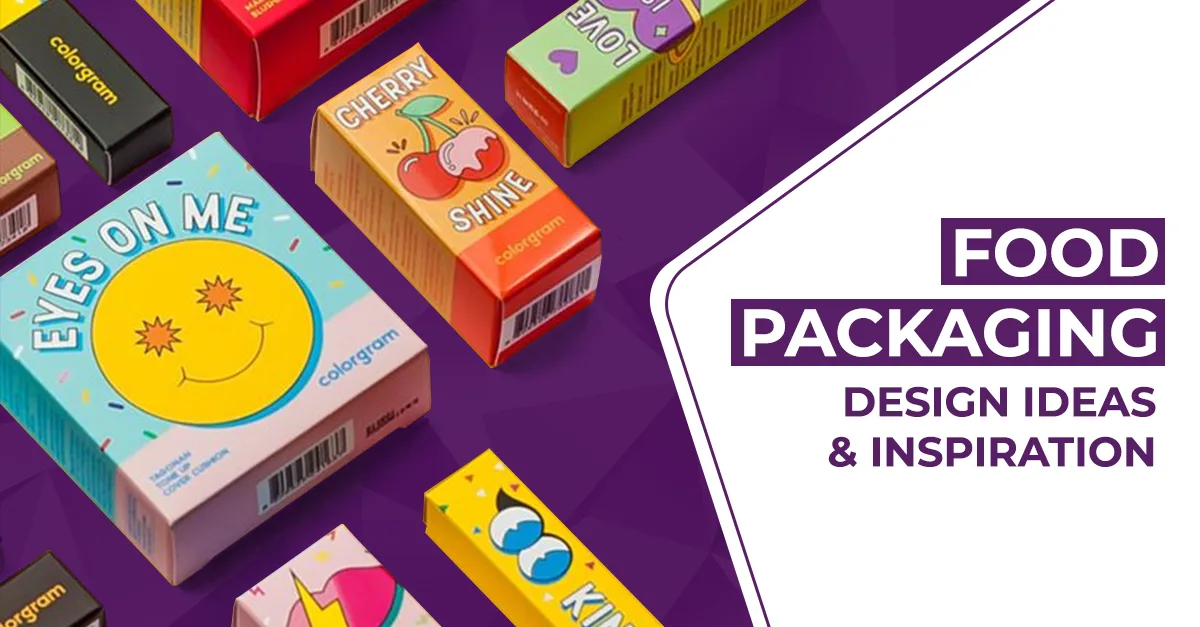
Your packaging is your first pitch, so make it count. Good food packaging design ideas help you sell.
In a crowded food market, packaging isn’t just there to protect what’s inside. It persuades. Whether you sell snacks, drinks or organic goods, your packaging speaks before your product does.
So how do you stand out on a shelf full of competitors?
Creativity is key. Minimal styles, eco-friendly materials and bold stories can all catch the eye, build trust and lift sales. In this blog, we share 10 standout food packaging design ideas from across industries to inspire your next packaging update.
If you're ready to turn plain packaging into a strong brand statement, let’s look at where design meets appetite.
TL;DR
- Food packaging design is often a shopper's first contact with the product, so it has to attract attention, build trust and sell.
- A 7-step process: define objectives, research the market, write a brief, sketch concepts, design and prototype, test, then produce.
- The food packaging design ideas below fall into 4 styles: minimalist, vibrant and colorful, eco-friendly, and creative.
Packaging Design Process: Seven Key Steps to Consider
1. Define Objectives
Good food packaging design starts with clear goals. Tie your packaging goals to your brand's wider plan. Decide who you're selling to, where the product sits in the market, and what the pack should say. Make each goal SMART: specific, measurable, achievable, relevant and time-bound.
Run a short workshop with the people who have a say, so everyone agrees on the goals. Look at what worked and what failed on past packaging, too. Clear goals guide every later step and keep the final design on track.
2. Conduct Market Research
Research helps you make better packaging choices. Learn what your buyers like, what's trending and what competitors do. Look at similar products and packaging designs to spot gaps and chances to stand out.
Use surveys, focus groups and online research to learn more. Keep an eye on new packaging materials and printing methods.
Watch how shopping habits change and how that affects packaging. When you know your market well, you can design for what your buyers want and expect.
3. Create a Design Brief
The design brief is the plan for the whole project. It should explain the brand, the product, the audience and the result you want.
Spell out the rules, limits and key messages the design must include. Go through the brief with the design team and invite their questions, so everyone reads it the same way.
A good brief is a roadmap, and it also sparks ideas. Add mood images and a short story to show the brand's feel and the emotion you want shoppers to have.
4. Conceptualize
This is where the creative work starts. Brainstorm ideas that fit your goals and design brief.
Ask your team to try ideas they wouldn't normally try. Sketch rough designs, build mood boards and make quick mock-ups. Bring in people from different teams, so you explore more options.
Aim for something original that stands out on the shelf. A mind map can help you sort ideas and pick a direction.
5. Work on Design and Prototyping
Now turn the best ideas into real designs, both on screen and as physical samples. Work closely with packaging designers and material experts so the pack looks good and works well. Try different colors, fonts and layouts to find the strongest mix. At the same time, build samples to test how easy the pack is to use.
Keep refining until creativity and practicality meet. 3D mock-ups can show how the pack will look on a store shelf.
6. Test and Gather Feedback
Test your samples with a small group of real buyers. Focus groups or hands-on tests show how people use the pack.
Note what they like, what they don't, and where they struggle. Use their feedback to fine-tune the design so it looks better and works better.
Try A/B tests on single elements, such as color or layout, to see which version buyers prefer.
7. Finalize and Production
Once you've made the changes, lock the design. Prepare print-ready files and work closely with your printer and packaging supplier.
Check quality at every stage of production, so the finished pack matches the design.
Stay in close touch with the production team until the pack is ready for stores. Use a checklist to confirm every detail, from color accuracy to materials, before printing starts.
Follow these seven steps and your food packaging will meet buyers' expectations and stand out from competitors.
Minimalist Food Packaging Design Ideas
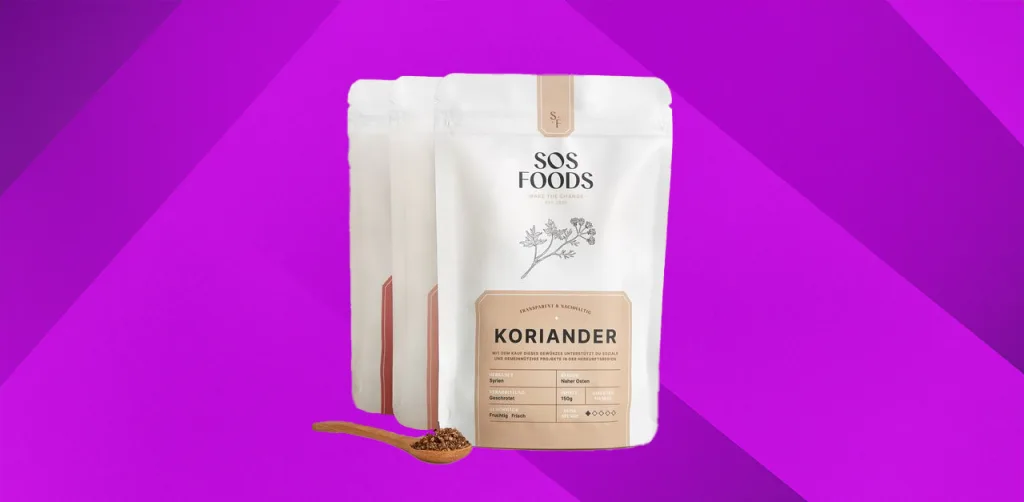
Minimal food packaging looks simple and stylish. Take this sleek pouch in soft white, cream, grey and black.
The small color palette feels pure and modern, and the logo at the top makes the brand easy to spot. A smart closure is useful and keeps the design clean.
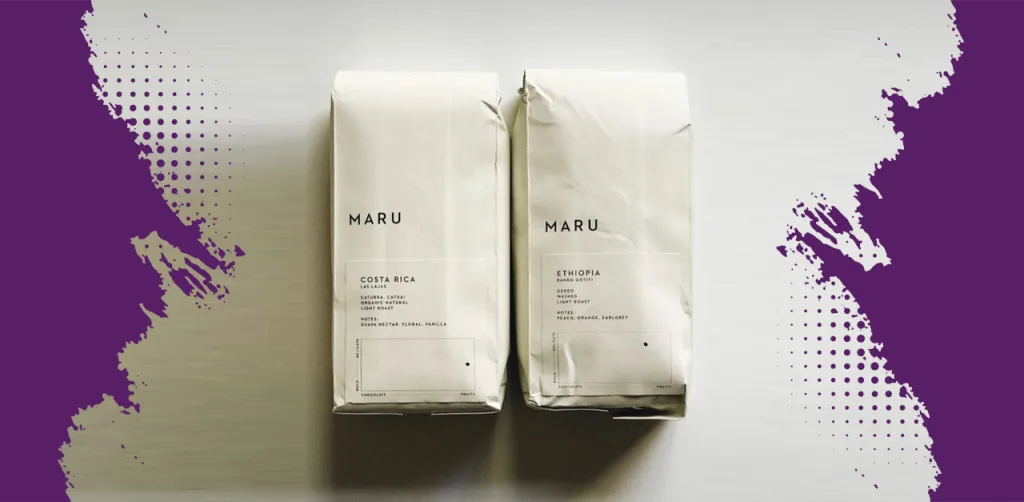
This light grey pack shows how simple packaging can still charm. Its paper-like texture feels eco-friendly, which appeals to buyers who care about that, and the flat base keeps the shape neat.
Small black text adds style, with the brand name “MARU” and short product details. A thin strip below the logo holds the key facts in a tidy layout.
You can take ideas from this design: keep it simple, make it useful, and balance looks with function.
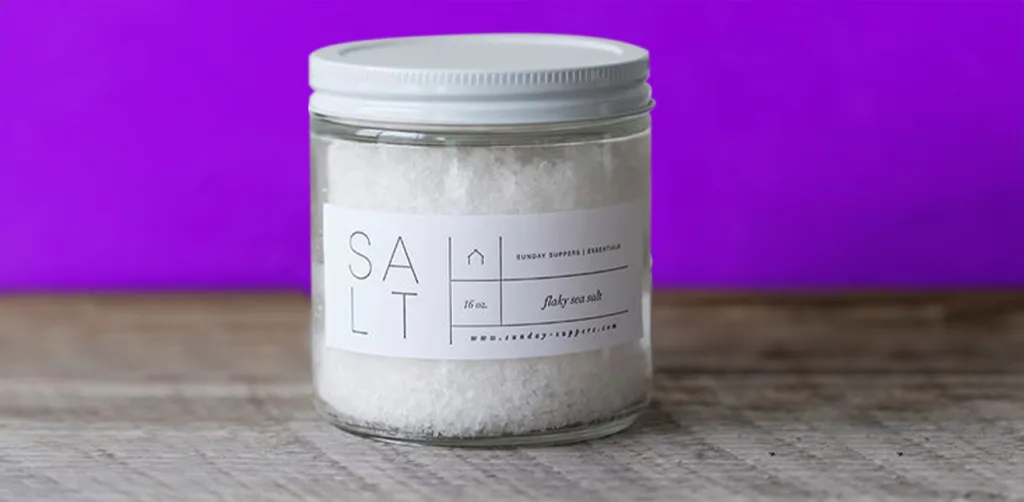
This minimal design uses a clear jar, so you can see the product, which feels pure and honest. The white metal cap and black text on a white label give strong contrast, so it's easy to read.
The markings on the cap are a smart, practical touch. The line break in "Salt" gives the design a modern, artistic feel.
The limited colors, mostly black and white, keep it simple and let the product and text stand out.
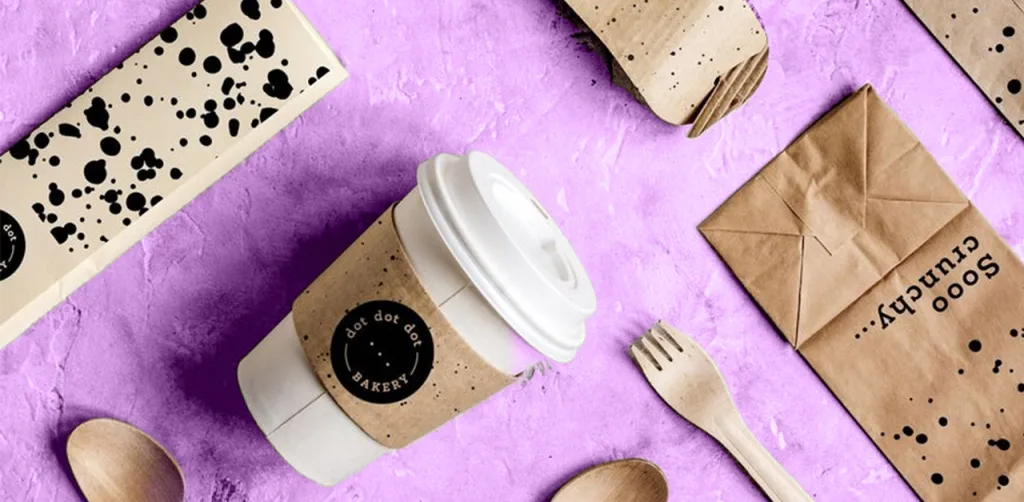
This coffee packaging is simple and stylish. A white paper cup with a soft grey label looks clean. A few dots add a playful touch and echo the brand name, “Dot Dot Dot Bakery.” Clear black text is easy to read, and the quiet colors feel calm.
Vibrant, Colorful Food Packaging Design ideas
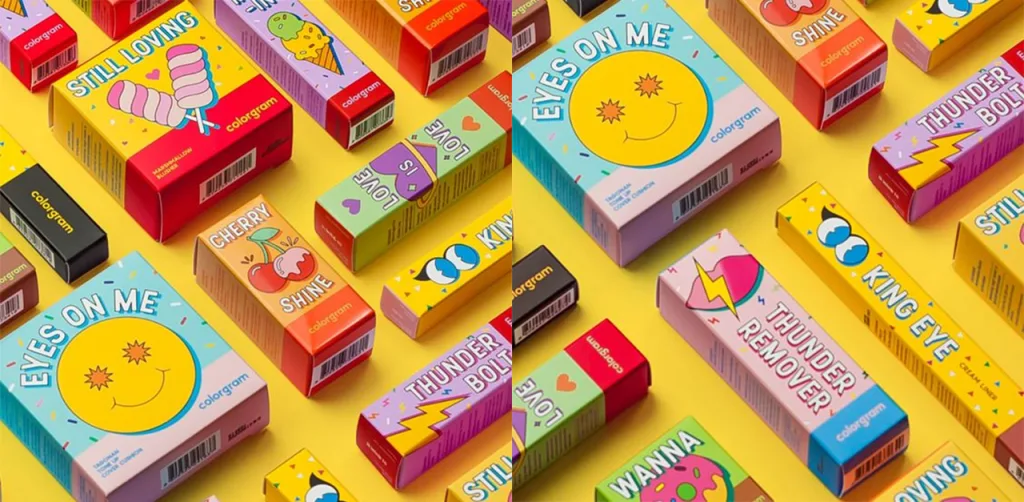
Bright, colorful food packaging feels fun, and this one is made for kids. Cartoon drawings of food, objects and playful shapes cover the packs. The bold colors excite children and make mealtime feel like an adventure.
A thick band at the bottom holds the brand name in a contrasting color. It's a smart move: the brand stays bold and easy to spot, even in such a busy design.
Take ideas from this pack: bright colors, fun drawings and a clear brand name make packaging that kids remember.
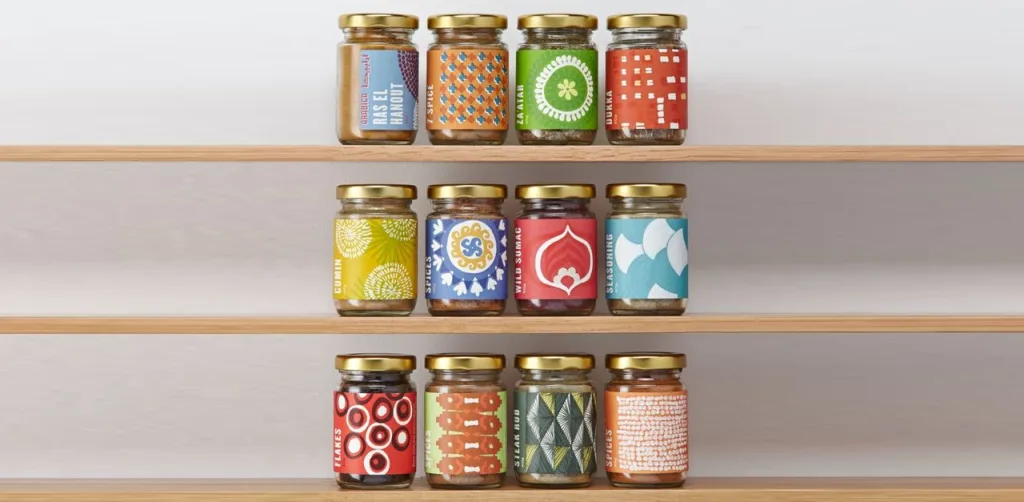
This glass jar stands out because of its packaging. The matte gold metal cap feels elegant and signals a premium product.
The thick label has an uneven, off-center shape that hints at a mystery inside. White text is easy to read against the label's detailed, colorful pattern.
The mix of colors and uneven shapes feels artistic and grabs attention. The label shows little about what's inside, which makes shoppers curious to find out.
Take ideas from this jar: a touch of elegance, bold art, smart color and a little mystery.
Eco-Friendly Food Packaging Design Ideas
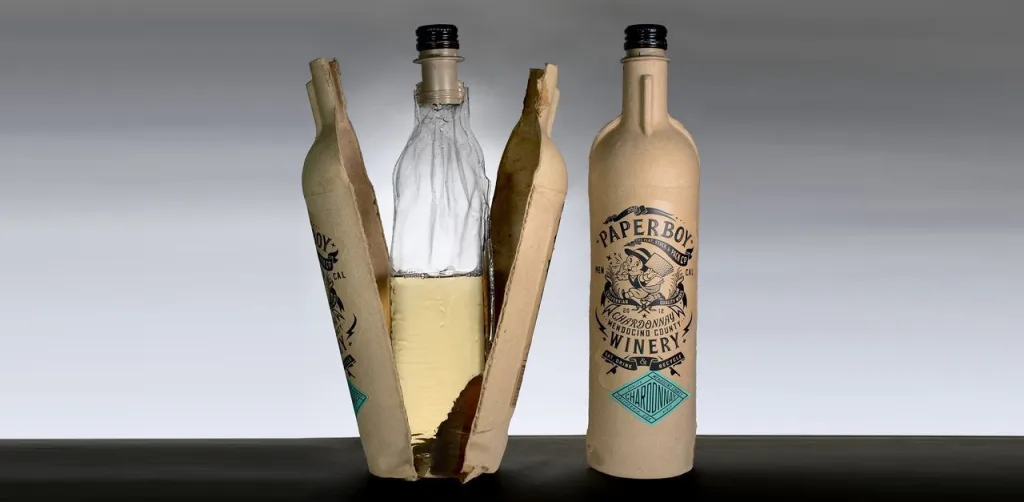
This eco-friendly alcohol bottle is both green and stylish. It's made from molded pulp paperboard, and its natural paper color shows care for the planet.
The brand name, product name and logo are all in black, which looks sleek and simple. This puts the brand first and shows how strong simple design can be. The bottle keeps the shape of a normal glass bottle, so it feels familiar even though the material is new.
It shows that packaging for alcohol can be both sustainable and stylish.
Take ideas from this bottle: a green material, simple branding, and a shape that's easy to use.
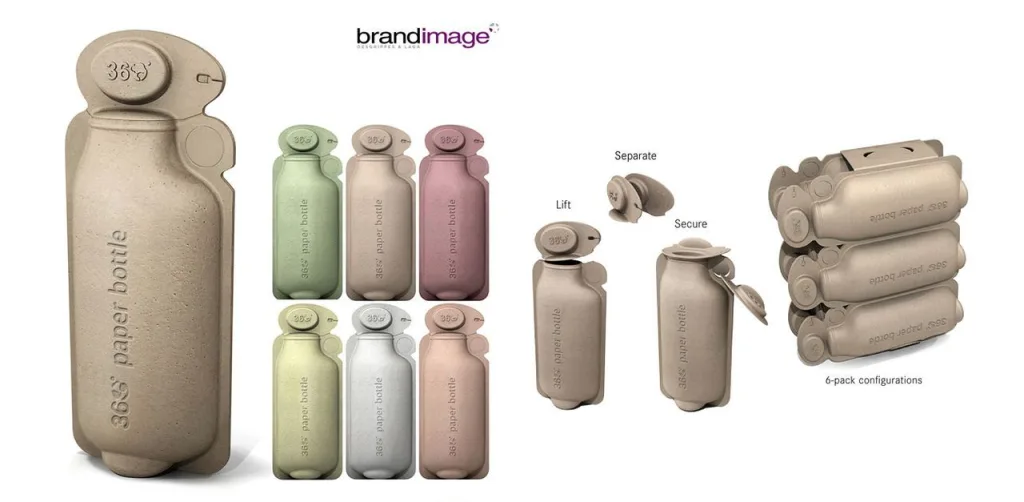
These bottles are made from plain or lightly colored paper. They're kind to the planet and still work well. The natural paper tones feel pure and green.
A built-in holder makes the bottle easy to carry and encourages reuse. The product name is pressed into the paper, a simple, handmade-style touch.
The paper cap lifts and closes, so it's easy to use and cuts waste.
This packaging is green, useful and good-looking all at once, and it shows the way to more thoughtful packaging.
Creative Food Packaging Design Ideas
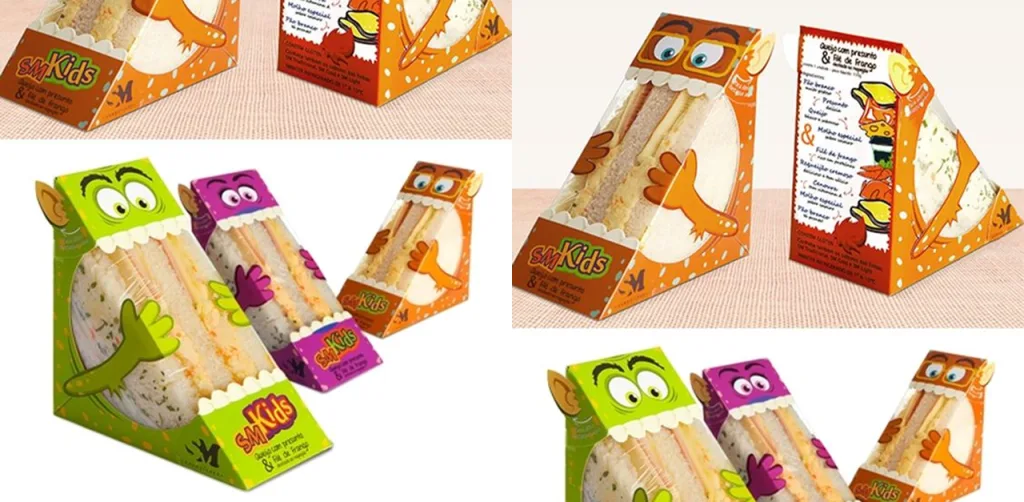
This clever pack turns a plain sandwich into a fun experience. The box has the same triangle shape as the sandwich, which catches the eye and adds a playful twist. Eyes, jaws, teeth and cheese slices give the pack a personality, especially for kids.
The clear plastic window looks like a tongue, which completes the joke. Drawn hands holding the sandwich make opening it feel playful.
Bright cartoon details on the back carry the story on, so people remember the brand. Take ideas from this pack: tell a fun story, invite people to play, and use shape and pictures to make food packaging exciting.
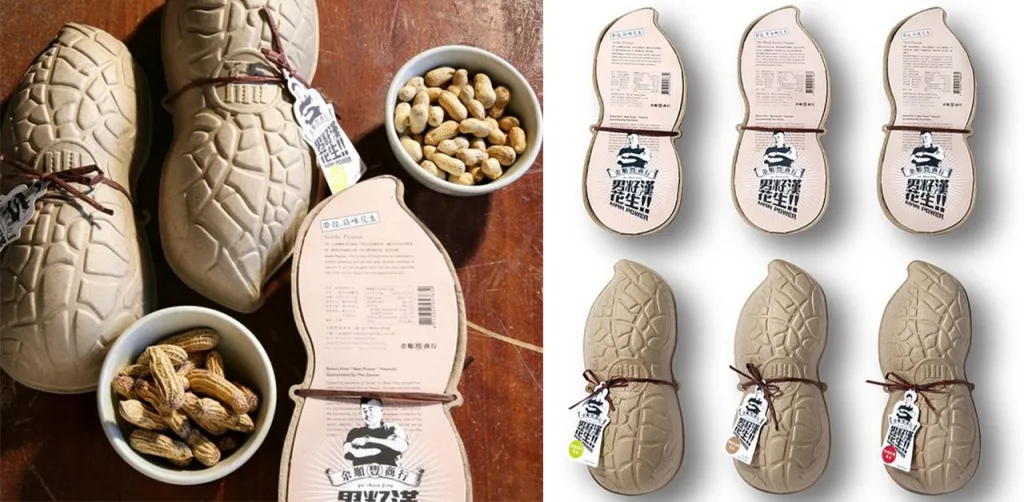
This peanut packaging copies the shape of a peanut, and it's practical too. It's made from eco-friendly paperboard and has the shape and texture of a peanut shell, so it's instantly recognizable.
Pressed patterns copy the texture of the shell, so the pack is nice to touch. A thread runs along it like the natural seam of a peanut, a fun nod to what's inside. The brand name sits on the thread like a clothing label, a playful way to show the brand.
The flat back holds the product details, so the pack is both creative and informative.
Take ideas from this pack: copy a natural shape, add creative details, and keep it practical.
Design Shifu’s Food Packaging Designs
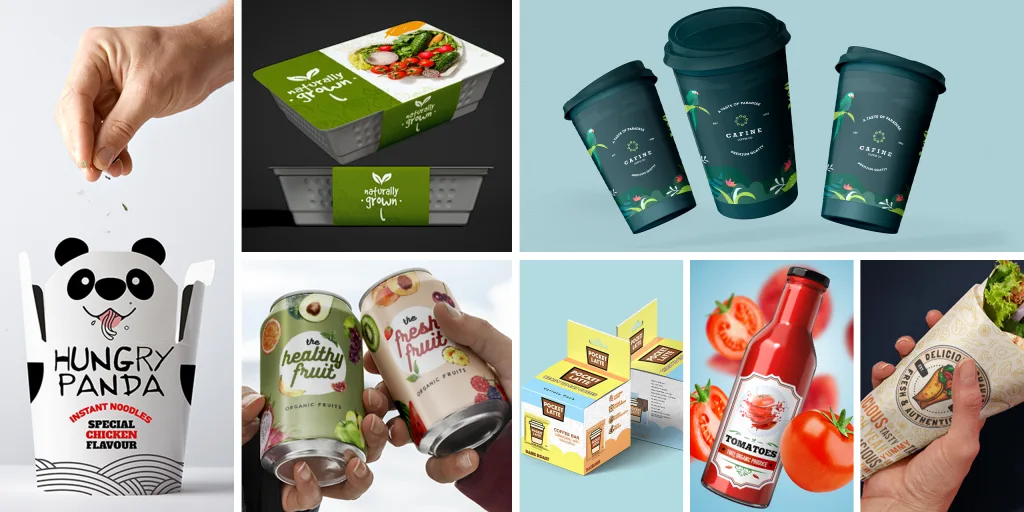
Each of the designs above tells a story that draws buyers in.
We see food packaging as a place to tell stories, mixing creativity with practicality. Take our fruit juice can design: it captures the bright colors of nature in soft yet vivid tones.
Then there's our playful 'Hungry Panga' brand for noodles, where the pack itself shows the brand name. A cute panda on the front grabs attention, especially from kids, and makes picking noodles fun.
Finally, as part of our focus on sustainability, we made eco-friendly packaging in earthy paper tones. These designs reduce harm to the planet and still look good and work well.
Each design is carefully planned to match the brand and the product's message.
Summing up
At Design Shifu, we believe great food packaging does more than protect the product. It mixes strategy, creativity and a focus on the buyer. Our team designs packaging that fits your brand, wins over your audience and helps your product stand out on the shelf.
Whether you want simple and stylish, eco-friendly, bright and bold, or playful and interactive, we're here to bring your idea to life.
If you want to see what strong packaging can do, book a demo with us today. Let's make your packaging more than a wrapper.
About the author